How Ultrasonic Flow Meters Work and When to Use Clamp-On VS Portable Models

Ultrasonic flow meters are crucial in practically every industry that relies on pressurized fluids, gases, and steam. This includes the most powerful manufacturing machinery, the systems that transport resources, and more.

Understanding how ultrasonic flow meters work can help you choose the right model for your specific application. 

Let’s take a closer look.

What is an Ultrasonic Flow Meter?

An ultrasonic flow meter is a high-precision measurement tool used to measure the flow inside something.

Let’s say that you’re operating a piece of equipment that transports natural gas through a pipe to another location. You want to make sure that the gas is moving at a consistent velocity and there are no pressure drops or potential issues going on that cause hiccups.

In that situation, you would use an ultrasonic flow meter to measure the flow of the natural gas.

However, this tool can be used to measure the flow of most things. In steam-based technology, various gases and liquids of all kinds can be measured as they move through pipes, tubes, and systems.

So, How Ultrasonic Flow Meters Work?

An ultrasonic flow meter uses sound waves. Sound penetrates the machine in highly calculated bursts, and it can tell how fast the substance inside is moving over a period of time.

If there are any fluctuations in speed while the reading is taking place, the machine picks it up.

That information can be used to determine whether settings need to be changed, troubleshooting measures need to be taken, or if immediate maintenance action is required.

This is an incredibly precise measurement device that can record very accurate readings reliably, and it’s perfect for applications with low tolerances.

Also, it’s an incredibly versatile piece of equipment. An ultrasonic flow meter can measure the flow of gases and liquids of various types. Not just one thing, like many other measurement devices are meant for.

Do You Need a Clamp-On or Portable Ultrasonic Flow Meter?

There are two types of ultrasonic flow meters you’ll likely come across whenever you’re shopping for one.

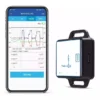
The first is a clamp-on model, such as the RS485 Modbus TDS-100F. These are extremely accurate, and they’re great for leaving on a pipe for a while for long-term monitoring. They’re also non-invasive. They won’t damage the equipment or require you to do anything to the pipes before you can start monitoring. However, it takes up more space, and it takes a little more time to install.

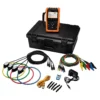
A portable unit, like the handheld DN15-100 model, is meant to be taken on the go. Whether you need to move from facility to facility performing readings, need a monitor that you can take to a job site, use, and take with you back to HQ, or otherwise don’t need to continuously monitor something, this is great. 

It’s also a good option for getting into difficult-to-reach spaces, because it’s smaller. The drawback of using a portable unit is that it isn’t quite as accurate. However, it’s still enough for most applications.

Get the Best Ultrasonic Flow Meter with AQ Measurement

If you require an ultrasonic flow meter, you need the best.

AQ Measurement supplies industry leaders from practically all industries with the precision instruments they need. Contact us today and get a free consultation!
Why Power Quality Matters: Hidden Costs of Electrical Disturbances

Whether you’re dealing with regular outages or barely noticeable power fluctuations, power quality is far more important than you might realize. Especially those minor issues that you might not notice or brush off.

We’re going to explain why power quality is so important, and how you can get started handling the problem.

1: Lost Productivity

This is immediately noticeable when you’re dealing with full outages. You lose productivity, and every minute that you spend fussing with the power to get back up and running, you’re losing money. 

Your equipment can’t run, your employees are left standing around, and all around, it’s a huge waste, even if it’s just a 15-minute break.

When the power issue is less noticeable, such as fluctuations in voltage, you can still lose productivity. If it impacts how your machines work, even those small hiccups add up to big losses.

This can be a major issue when speed is crucial for your operation. Some companies put out tens of thousands of products per day, and short lulls in productivity or frequent hiccups can lower production by thousands of units. That’s why power quality matters. It directly affects your bottom line and keeps your operation running at full capacity.

2: Equipment Damage

When your equipment runs on your power grid, which most equipment does, power quality issues can prematurely damage that equipment. That’s why having a reliable power quality analyzer is so important. These devices are used to track, diagnose, and prevent expensive problems down the line.

Each machine is made to operate with a steady flow of electricity. If that flow suddenly slows or it’s halted entirely, the equipment can have minor operational errors that lead to bigger repair issues. 

Complete sudden halts can be extremely detrimental because they often force the machinery to stop suddenly and without going through proper shutdown processes.

Not only does this cause major disruptions in productivity and a lot of headaches, but it also creates a lot of undue financial stress. When you suddenly have major repairs or have to replace unique equipment, the costs can be astronomical.

3: Higher Labor Costs

We mentioned this very briefly earlier, but any time your facility’s power quality causes a productivity lull, it’s not just your equipment that’s stopping. It’s your workforce, too.

If you have an electrical issue that costs you an hour of scheduled work time, you will often end up paying your workforce for that entire hour spent doing nothing. It’s boring for them, and it’s a waste of resources for you. Paired with the lack of production creating revenue throughout that period, the issue is compounded.

Resolving Power Quality Issues

Resolving power quality issues can be a hassle. Anything that’s a widespread electrical issue takes specialized care to handle.

However, the first step is understanding that something is going on. Oftentimes, minor power quality issues go under the radar and cause cumulative damage over a long stretch of time. It’s not always as noticeable as when the power is fully cut regularly.

The best way to troubleshoot the problem is to regularly monitor your power quality, and you can certainly check it whenever a noticeable issue occurs, too. For that, you need precision measurement instruments for the power systems you’re working with.

At AQ Measurement, we provide all the precision measurement tools you need to troubleshoot, measure, and get the job done right. Contact us today to see how we can help!

How to Use a Sound Level Meter: A Guide to Decibels and Noise Levels

A sound level meter is a crucial precision instrument used in a wide variety of applications. Including some that you might not expect. Such as manufacturing.

However, unless your job requires you to use one regularly, you might not be aware of how to properly use one for accurate measurements.

In today’s article, we’ll show you how to use a sound level meter for precise noise measurement so your results are accurate and easy to interpret.

1: Calibration and Setup

The first thing you have to do is calibrate the meter. This is necessary for any precision instrument, and it essentially uses a known value to compare its first reading to and adjust accordingly.

The way you calibrate your meter is going to depend on the exact model you’re using. For instance, the powerful, handheld PCE-432 sound level meter offers data logging and GPS features for detailed noise analysis in the field, while this wall-mounted digital meter provides continuous noise monitoring with a colorful display ideal for indoor settings. 

Different models require different calibration steps, so it’s important to follow the instructions provided with your device. Once you’ve followed the calibration steps, there’s a simple setup step you need to complete before moving forward.

The first setup step is to set the weighing scale. Decibels (dBa) are what you’ll use in the vast majority of cases. Other features might also need to be set up if they’re relevant to your use case. For example, when you need a series of stable readings, you might want to use the slow time weighting feature.

2: Place the Meter

When you place the meter, it needs to be placed in a position that is level with your ear, whether you’re sitting on something or holding it out throughout the reading.

The reason for this is that sound levels can vary slightly at different positions, even when a noise is in the same room. You want to know what the people in the room will experience. At least, that’s the case in most professional settings.

If the workers are in a room standing, it’s not as useful to know what they’d experience if they were on the floor for some reason or up in the rafters.

3: Take Your Reading

If you followed the setup corrections, you’ll get a readout in decibels when you start the reading, according to the instructions on your sound level meter. It’ll show up on the display for easy reading.

Using Your Reading

Once you have your reading, it really depends on what you’re using it for. If you just needed to check and see if you’re crossing certain noise levels, you’re done. 

If you need to record your readings, it’s usually best to record various conditions impacting the reading, such as distance from the source, positioning, etc. Then, you can analyze all long-term readings against the conditions each time.

Buy the Right Sound Level Meter for Your Needs

So, how to use a sound level meter, and why do you even need one in the first place? You might need to measure sound levels for OSHA requirements, compliance with city requirements, or any number of other things. It’s important to have the right equipment when you do.

At AQ Measurement, we provide the finest precision instruments, such as sound level meters, to professionals, and we’re renowned for our quality and service. Contact us anytime to dive deeper into our product lineup or speak with a specialist if you have any other questions!

What is a Particle Counter and How Does it Work: Clean Rooms, OSHA Compliance, and Everyday Use

Until you need it professionally, you probably won’t know what a particle counter is. It’s not a common tool in everyday life. However, it’s important to understand it and its use when you do finally need one.

So, how do particle counters work, and why are they such an indispensable piece of equipment for anyone tasked with monitoring air quality or maintaining a tightly controlled environment? Let’s take a closer look!

What is a Particle Counter and Who Needs One?

A particle counter is a precision instrument used to measure the number of specific particles in a room. This is used to spot contamination in the majority of cases.

It’s not something that the average person needs on a daily basis, but it has an important role in many different fields and specialized uses.

Common uses for a particle counter are clean rooms that must not be contaminated, industrial zones that need to monitor how much of certain toxic materials are in the area, and in use cases where contamination can create major issues for human safety or a project at hand.

How Does a Particle Counter Work?

A particle counter is a fairly advanced piece of equipment, but it’s not too difficult to use a modern one.

In general, a sample of air from the room is forced into a chamber in the device. The counter then pushes deflected light into the chamber, and that light is scattered due to the particles in the chamber.

The counter then analyzes that scattered light and starts categorizing the particles. You get a reading describing what the counter was able to analyze.

How Do You Use a Particle Counter?

Using a particle counter is a little more complicated than a simpler instrument, such as a sound level meter, but it’s not overly complicated.

Before doing your count, make sure the sample inlet is clean. Any debris that makes its way inside can interfere with the device and dramatically skew your results. 

Take the large B7501-30 model, for example: it’s a robust instrument built specifically to monitor large particles in demanding environments, such as industrial air quality systems or cleanrooms with strict classifications. Given that level of precision, it’s easy to see why keeping its onboard diagnostic systems clean is so important.

With most models, you’ll need to power the unit and let it heat up just like you would your household oven before using it.

You don’t want to start the reading until you’ve set your parameters. Each model is different, and you’ll need to reference your owner’s manual to know how to navigate each option. 

For example, the handheld H8503 model is designed for demanding settings like cleanrooms and industrial sites, and the compact and affordable PCE-PCO 2 particle counter is ideal for monitoring air quality in homes and offices. If you buy one of ours, you’re more than welcome to contact us with any questions!

The rest is automated. Just start the reading as outlined in your owner’s manual. It’s typically done with just the push of a button.

The counter will suck air through the sample inlet, hit it with a laser to scatter light off the particles, mirrors will bounce that light into a photodetector, and the device will organize and count the various particles.

Your reading will be set by your parameters, and you’ll be able to take action. Some even let you print off results for easy recording.

Get a High-Quality Particle Counter from AQ Measurement

So, what is a particle counter, and why is accurate particle measurement so important? We’ve explored how these advanced instruments measure airborne particles, their central role in industries like cleanrooms and safety compliance, and practical tips for choosing (and using) the right model. 

AQ Measurement offers a broad range of top-quality products designed to meet the needs of professionals across many fields. Contact us today to learn more about our products or to speak with someone who can help with your specific needs!

0